You know quality, but homeowners pay for curb appeal.
By starting with simple design choices that stand the test of time, you can help your customers achieve the look they want, with the quality they deserve.
Here are five key design tips to help guide customers through roof shingle selection. When you combine your newly honed design talents with Hover’s end-to-end design capabilities, your ideas (and their dream home) come to life—for faster sales and no regrets.
Tip #1: The roof is a home’s “fifth wall”
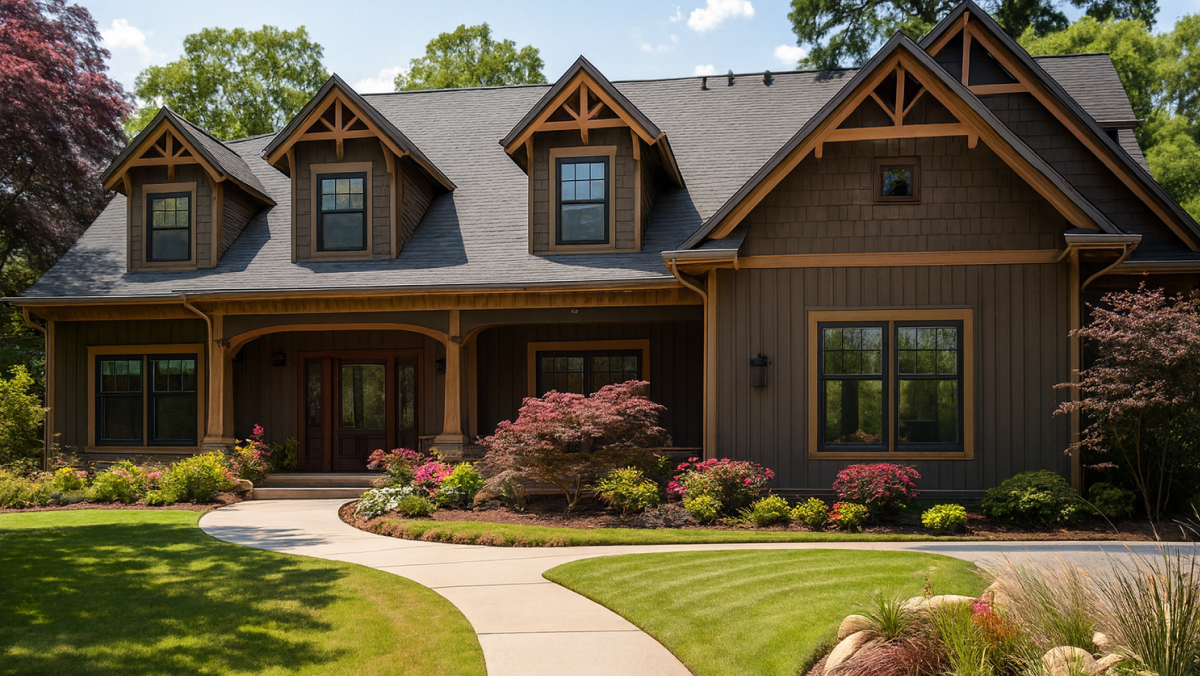
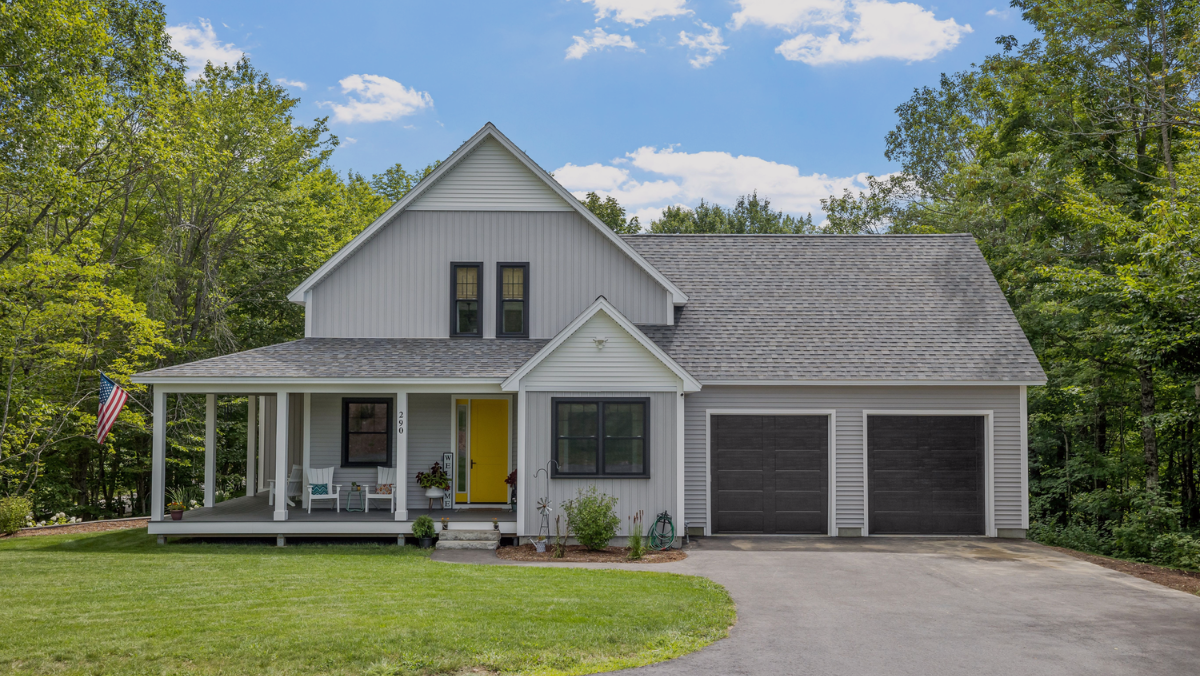
The roof is a massive surface area, so don't treat it like an afterthought. Shingles are the fifth wall and their color anchors the whole exterior.
- Choose color combinations based on the home’s fixed elements: The color of brick, stone, or permanent trim is your starting point. Shingle color has to complement these materials, not fight them. Stick to neutral tones that let the fixed elements shine.
|
Home color |
Shingle color |
|
Cool neutrals (white, light gray) |
Charcoal or dark gray, blue-hued slate, black metal |
|
Warm neutrals (beige, brown, green) |
Green slate, brown or weathered wood, bronze metals |
|
Painted house in cool colors ( blue, green, purple) |
Charcoal or dark gray |
|
Painted house in warm colors (yellow, red) |
Brown or weathered wood, bronze metals |
|
Brick or stone |
Neutrals like charcoal, brown or weathered wood |
- Work with the roof pitch: On a steeply pitched roof, the shingles are very visible. A darker, more uniform shingle can give the home weight and balance. A low-slope roof allows for more subtle tones.
- Climate matters: Lighter colors reflect heat and are a smart choice for hotter climates. Darker colors absorb heat, which can be useful in colder regions.
Tip #2: A home’s architecture should dictate shingle style
The style and profile of the shingle should match the home’s architectural DNA.
|
Architecture style |
Shingle type |
Benefit |
|
Traditional, Colonial, Craftsman, Cape Cod |
Dimensional shingles, “faux” or real wood shake or slate |
Layered look and deep shadow lines complement the home’s heavy trim and historical feel |
|
Modern, Minimalist |
Simple, low-profile, uniform shingle; metal panels |
Consistent with the home’s clean lines |
|
Cottage, Rustic |
Textured shingles with varied tabs or styles; wood shake or slate |
Adds sense of hand-built quality and age to the roof plane |
|
Mediterranean, Spanish |
Clay or concrete |
Consistent with regional, rustic aesthetic |
Tip #3: Shingle scale should be consistent with home size.
Scale and proportion matter when choosing roof shingles. Steeper roof shingles are more visible, so make sure to match shadow lines to the scale of the pitch. Always visualize shingle size on the actual home to ensure it’s proportional to the structure.
|
Home size |
Shingle type |
|
Smaller |
Standard 3-tab, smaller shingles |
|
Large |
Architectural/laminate shingles with robust profile, larger “faux” slate or shake designer/luxury shingles |
Tip #4: Layer textures and materials.
Layering different materials adds immediate value and depth, and is a safe way to get creative.
- Create shadow lines with high-quality dimensional shingles. Playing with light and shadow can elevate the roofscape.
- Specialty shingles that mimic slate or cedar shake upgrade the roof texture without adding maintenance or weight.
- Add visual interest and prevent a roof from looking flat by using shingles with varied, multi-tonal granules that blend colors.
- Avoid varying shingle pattern and stick to the classic, straight-course lay.
Tip #5: Always show your customer what a shingle type and color will look like on their own home.
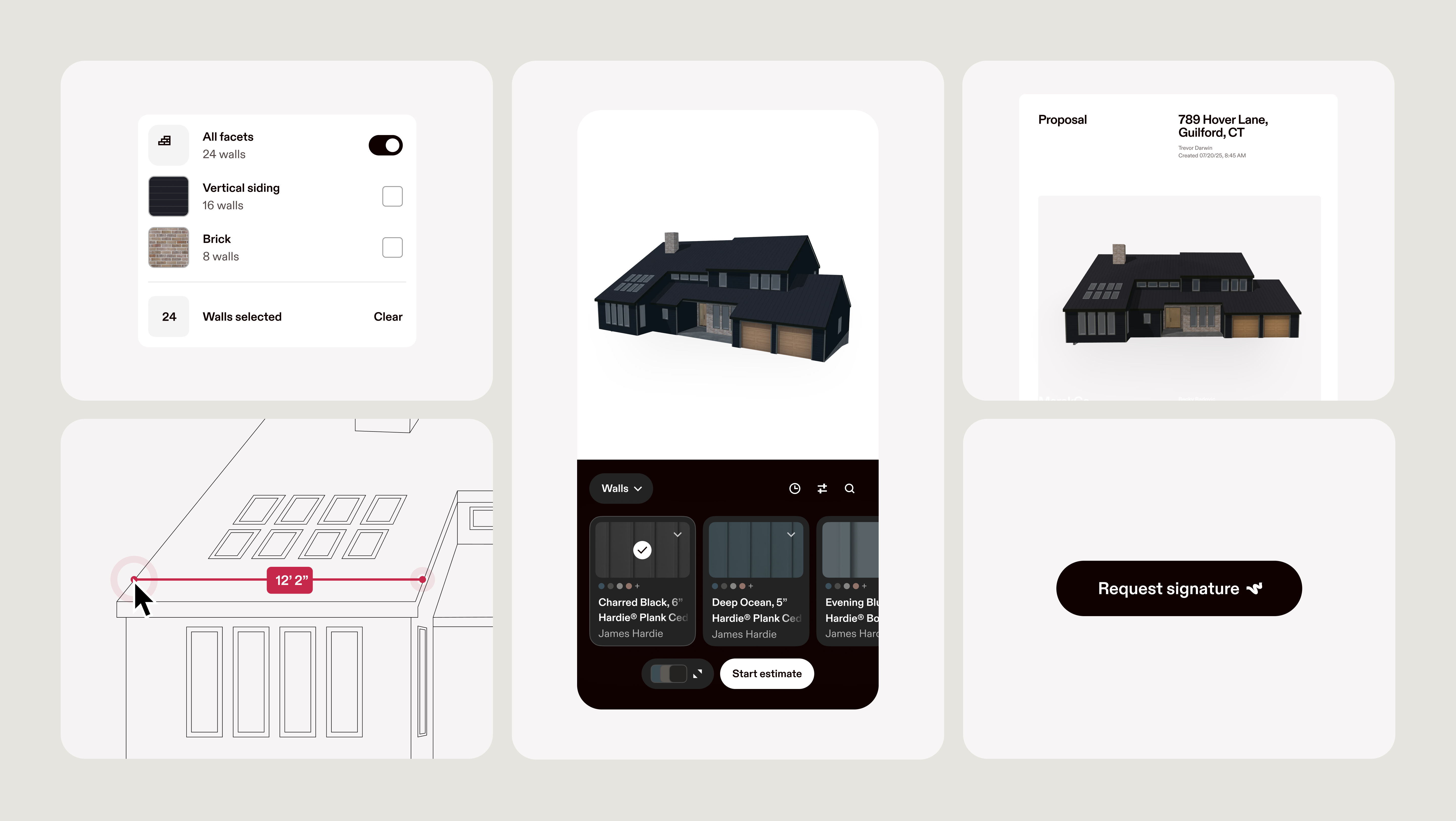
Here’s where Hover Design comes in. In seconds you can show the homeowner exactly what the shingle style and color you recommend will look like on their own home, in 2D and 3D. It’s a great opportunity to compare the aesthetic value of upgraded shingles over basic asphalt, and convince them the upcharge is worth it. It’s also helpful for demonstrating the importance of complementary shingle and wall colors. Ultimately, you’re giving them the confidence that what they see is what they’ll get. And, with Hover’s new visual workflow, you can seamlessly move from measurements to design to estimates in just a few clicks.
Let the roof bear all the weight and lead the shingle selection conversation by sticking to these basic design principles and leveraging Hover’s visualization technology. You’ll help your customers design a beautiful, cohesive exterior they’ll love, and gain customer confidence for a faster approval process.